
Is Your Madrasah Running on Systems or Sacrifice?
What would happen if your most committed teacher left tomorrow? Or if you were suddenly no longer able to come into the madrasah? This blog explores why every madrasah needs good systems, not to replace dedicated people, but to free leaders from constantly firefighting, allow institutions to flourish and enable their work to continue benefiting future generations long after they are gone.
Maulana Mohim Khan
7/13/20266 min read
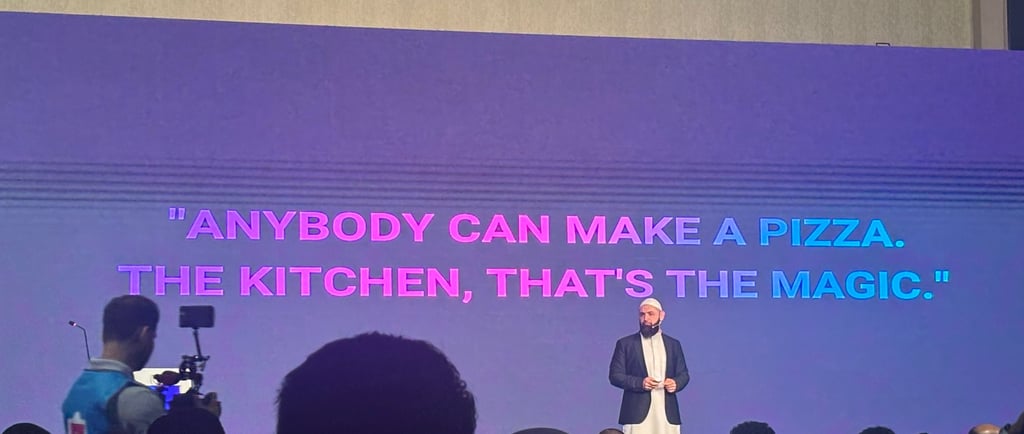
Over the weekend, I had the opportunity to attend the GMC Summit in Istanbul, where Muslim media organisations, content creators and leaders from over 40 countries came together to share ideas, learn from one another and discuss how we can better serve the ummah.
One thing I have always believed is that, regardless of how long we’ve been serving our communities, there is always something new to learn. Sometimes the most valuable ideas come from people working in completely different fields. Our role as leaders is to listen, reflect and ask ourselves, “Could this benefit the work we do?”
One of the sessions was delivered by the CEO of OnePath Network. He spoke about his journey from being a solo content creator to building a sustainable organisation. Throughout his talk, one word kept coming up:
Systems.
As I listened, I found myself thinking less about media organisations and more about our madrasahs.
Then, almost immediately, I was reminded of a conversation I had some time ago with a respected Shaykh who has many years of experience in educational leadership. He asked me a question that I have never forgotten.
“Have you ever done the Bus Stop Test?”
The Bus Stop Test
Slightly confused, I smiled and replied, “No… what’s the Bus Stop Test?”
He said, “Imagine you leave your house today, walk to the bus stop and, Allah forbid, you’re hit by a bus. From tomorrow, you’re no longer able to come into the madrasah.
Would everything continue running in the way you intended, or would everything begin to fall apart?”
SubhaanAllah, that question has stayed with me ever since.
It’s not really about a bus stop, nor is it about expecting the worst to happen. It’s about asking ourselves an honest question as leaders.
If one of your most experienced teachers left tomorrow, what would happen?
If a new teacher joined next week, is there a clear process to help them settle into their role, or would they simply learn as they go?
If somebody asked, “How do we do this here?”, would the answer be written down somewhere… or would everyone point them towards you?
And perhaps the most difficult question of all…
If you couldn’t come into the madrasah tomorrow, would it continue to function in the way you had hoped?
When Everything Depends on One Person
For many of our madrasahs, the honest answer to some of those questions may well be, “Probably not.”
And that’s completely understandable.
Our madrasahs have been built upon incredible sacrifice. Many are run by dedicated individuals who juggle teaching, administration, parent communication, meetings, finances and countless other responsibilities, often alongside full-time jobs and family commitments.
Alhamdulillah, despite limited manpower and resources, they continue to serve our communities with sincerity and dedication.
The challenge is that, over time, many important tasks become dependent on individuals rather than systems.
The headteacher knows how to deal with admissions.
One teacher knows how organise the annual examinations.
Another knows how parent’s meeting works.
Someone else knows where all the important documents are kept.
Everything works… because the right people are there.
But what happens when they’re not?
This isn’t a criticism of our madrasahs. In many ways, it’s simply the reality of how they’ve developed over the years.
However, if we want our madrasahs to continue growing and serving future generations, there comes a point where hard work alone is no longer enough.
Good people build great madrasahs.
Good systems help them remain great.
What Is a System?
So, what exactly do I mean by a system?
It doesn’t have to be anything complicated.
In its simplest form, a system is an agreed way of doing something so that it is carried out consistently, regardless of who is doing it.
Whether it’s enrolling a new student, following up on fees, planning the new academic calendar, recruiting and training a new teacher, responding to a parent’s concern or preparing for examinations, a good system helps ensure that important tasks don’t depend solely on one person’s memory or experience.
The truth is, every madrasah already has systems.
The question is whether those systems are intentional… or accidental.
In some madrasahs, if you ask three different people how something is done, you’ll receive three different answers.
In others, there is a clear process that everyone understands and follows.
That doesn’t mean every system has to be written in a lengthy policy or procedure document. Some can be simple checklists, templates or agreed routines. The important thing is that people know what needs to be done, when it needs to be done and who is responsible for doing it.
Where Should We Begin?
From my own experience, I’d say don’t begin by trying to write dozens of new policies or procedures.
Instead, begin by looking at the things that regularly cause confusion, are frequently forgotten or seem to depend heavily on one particular person.
Sometimes, the problems we keep facing aren’t there because people aren’t trying hard enough. They’re there because we’ve never stopped to ask whether there’s a better way of doing things.
I remember a few years ago, we began noticing that many of the issues we faced with new teachers weren’t because they lacked willingness to learn.
Quite often, they simply didn’t know how we did things.
Basic communication with classroom routines, expectations and day-to-day procedures were often being explained differently depending on who they happened to ask.
Eventually, we realised the problem wasn’t our teachers.
The problem was our system.
So we sat down and asked ourselves, “How can we make this easier for every new teacher?”
That led us to redesign our recruitment process, create clearer induction procedures and develop our own Teacher Guide.
Did it solve every issue overnight?
Of course not.
But Alhamdulillah, it significantly reduced misunderstandings, improved consistency and gave new teachers much greater confidence from the very beginning.
Improving One System at a Time
We experienced something similar with parent communication.
Over the years, we introduced more consistent ways of keeping parents informed, including regular parent meetings and dedicated communication channels. Again, not because parents were the problem, but because clearer systems reduce misunderstandings for everyone.
More recently, it’s also made me reflect on leadership and succession planning.
From time to time, opportunities arise within every madrasah. We may need a deputy headteacher, someone to oversee administration, lead teacher development or take responsibility for an important area of the organisation.
Too often, however, these roles are filled simply because someone is available, willing or well-known to us.
But availability doesn’t always mean suitability.
Over the years, we’ve also made that mistake ourselves. We’ve appointed good people into important roles, only to later realise that we hadn’t properly prepared them, assessed whether they had the necessary skills or given them a clear pathway into leadership.
It wasn’t a people problem.
It was another reminder that we needed better systems.
I’m still reflecting on what a proper leadership progression pathway for madrasahs should look like, and inshāAllāh, I’d love to share some of those thoughts in a future blog.
Which Systems Matter Most?
Every madrasah is different, so there isn’t a single list that will suit everyone.
However, if we look across most madrasahs, there are certain areas where clear systems can make a huge difference.
For example:
Student admissions and enrolment
Teacher recruitment and induction
Parent communication
Attendance and absence follow-up
Student behaviour and discipline
Staff disciplinary and grievance procedures
Safeguarding and child protection
Assessment and reporting
Staff development
Staff and student tarbiyyah
Leadership succession and progression
Emergency procedures
The list could go on.
The important thing isn’t trying to create every system overnight.
Start with the areas that regularly create confusion, rely heavily on one individual or repeatedly become a source of frustration.
As those systems become clearer and more consistent, you’ll often find that many other areas begin improving naturally as well.
Systems Alone Are Not Enough
At this point, it’s worth mentioning that good systems aren’t about creating unnecessary paperwork or making a madrasah feel like a business.
They’re about making life easier for the people who are already serving.
They reduce confusion.
They improve consistency.
They help new members of staff settle more quickly.
Most importantly, they allow sincere people to spend less time firefighting and more time doing what really matters: nurturing the next generation.
One final thought.
Even the best system won’t work if the culture of the madrasah doesn’t support it.
A system may explain what should happen, but culture often determines what actually happens.
If staff don’t feel comfortable asking questions, giving feedback or suggesting improvements, even the best-written procedures will eventually sit on a shelf collecting dust.
One of the greatest ways to improve our systems is to listen to the people who use them every day.
Our teachers.
Our parents.
Our volunteers.
Sometimes, a simple suggestion can save hours of confusion and make life easier for everyone.
If we have the humility to accept feedback without becoming defensive, our systems, and ultimately our madrasahs will continue to improve.
A Question Worth Reflecting On
As I leave Istanbul, I find myself reflecting on many of the ideas that had been shared over the weekend.
However, the one that has stayed with me the most isn’t a new strategy or a management technique.
It is a simple reminder that organisations which continue to grow and benefit people for years are rarely built upon hardworking individuals alone.
They’re built upon people who are supported by clear systems, shared responsibilities and a culture of continuous improvement.
Our madrasahs have always been built upon sincerity, sacrifice and countless hours of khidmah (voluntary service). May Allah reward every founder, imam, teacher and volunteer who has dedicated themselves to serving His Deen. Ãmeen
Perhaps now it’s time to ask ourselves one simple question.
If I couldn’t come into the madrasah tomorrow, what would continue exactly as it should… and what would depend entirely on me?
The answer to that question may well reveal the next system your madrasah needs to build.
Madrasah Consultancy is a Community Interest Company registered in England and Wales.
Company Number: 17166306
© 2026 Madrasah Consultancy. All rights reserved.
